
Bonefish Thirty Inches of Attitude
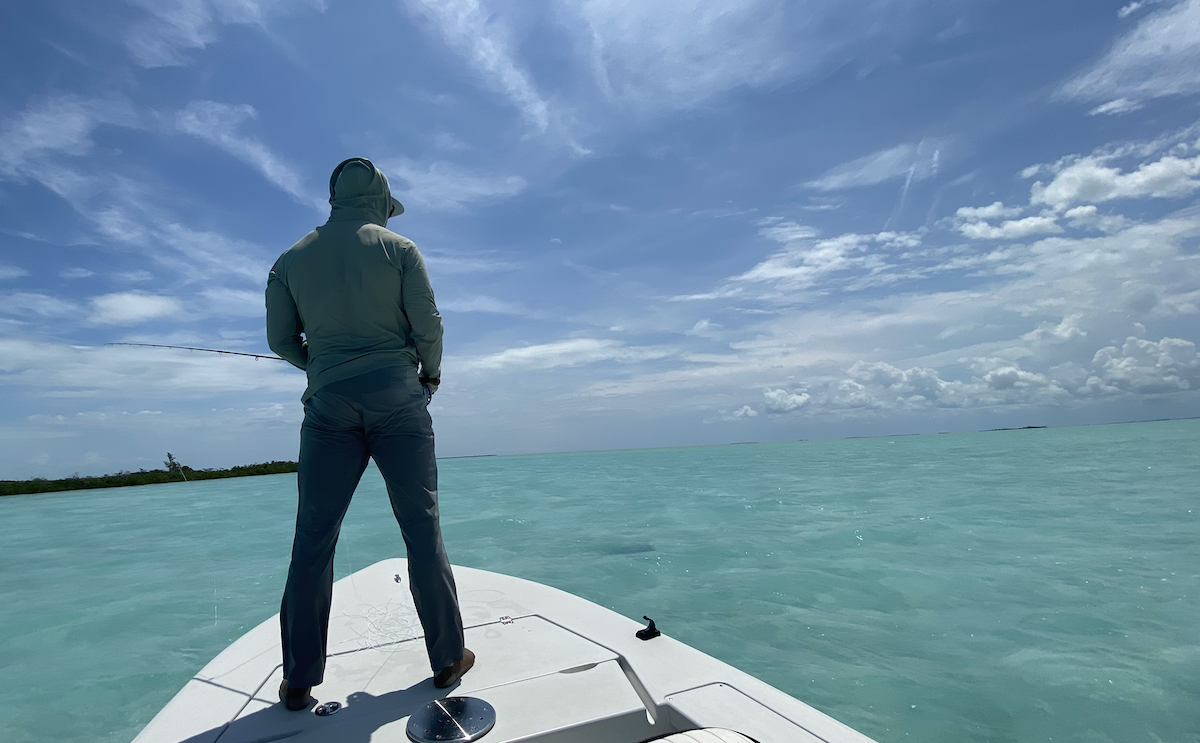
Bonefish, thirty inches of attitude were waiting but our day was unusually calm. Our guide called it the doldrums. That’s a term used by sailors to describe the Intertropical Convergence Zone near the equator, where there is a monotonous, windless weather pattern. Our wind was 5 knots. Too calm to wade the flats. “Bonefish will hear you coming miles before you see them.” The front deck of the boat was our only option that day, and it cooked under a cloudless sky, 88 degrees with 90 percent humidity.
The ambience: clear, shimmering water, osprey calling along with the quiet company of herons, solitary sandpipers, willets, ruddy turnstones, terns, sanderlings and plovers. What was new and unusual for any fly-fishing adventure was the serenade of wild pigeons that came from deep within the mangroves. It was more calming than our motionless boat.
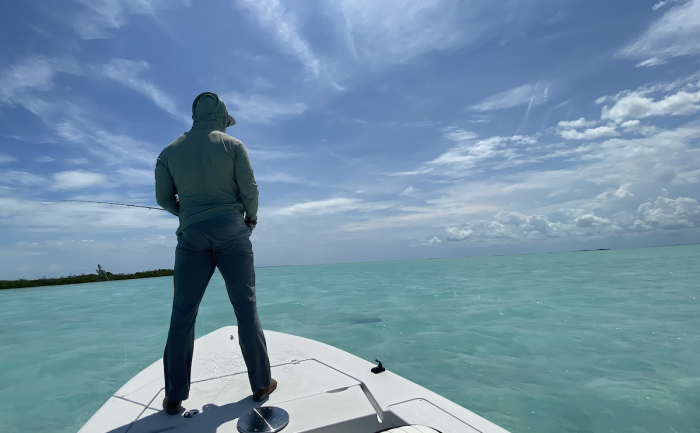
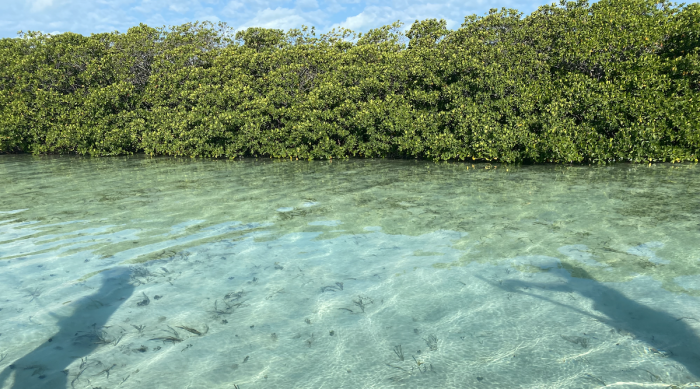 Steadily powering a 9-weight rod required all the stamina one could muster. But connection—the zippity rush of a bonefish unspooling your line like an atomic projectile bolting for the horizon, re-energized you more than any electrolyte cocktail could.
Bonefish are built like torpedoes, named for their exceptionally bony flesh. They are silvery, striped, fork-tailed, and streamlined for speed. Nothing compares to sighting a school of silvers and watching them transform from skittish and paranoid to marauding predators when they spot your fly. 
Sight fishing from the boat deck doesn’t make catching bonefish easy. It makes you less of a disturbing and noisy klutz. After the captain puts you in the best possible position, ideally your patience, focus, and skill meld into posture and presentation. The thrill of success follows one thing—how softly your fly lands on the water.
Bonefish: Wading for Thirty Inches of Attitude
Wading the ankle-deep waters where bonefish thrive can appear easy and disarming at first. But the sand you traverse when flats wading can vary from the pleasantly smooth oolitic aragonite sand that forms in the warm water as smooth egg-like granules, to the sometimes-slippery calcium carbonate sand from pulverized coral, all the way to thick mud/sand paste that you don’t want to linger in. Strength, stamina, and balance are required for success. These fish are wary, fast, and elusive in inches of perfectly clear water.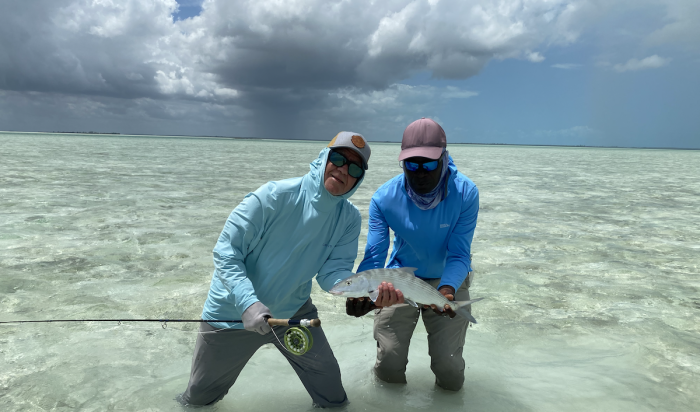
Bonefish are sensitive to their position in the food chain. They are sought after by sharks, barracuda, tarpon, and man, and they react to the slightest movement or sound. If one flinches from a perceived threat, it triggers a reaction to bolt in the entire school.
When you wade sloppily through that same sand and mud, all you may see are flashes of silver in the sunlit, shallow water. 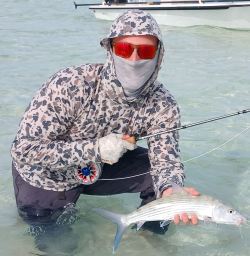
Wading for bonefish is the ultimate fly-fishing challenge. Immersed with your quarry, using all of you—strength and coordination, patience and skill, you put yourself in the best possible position.
Our last fish was 30 inches of scales, muscle, bone, and attitude. A perfect omen to follow the sun.
Become a VIP Member
Categorized in: Adventures